Public Lands Interview Series No. 1: Stilly
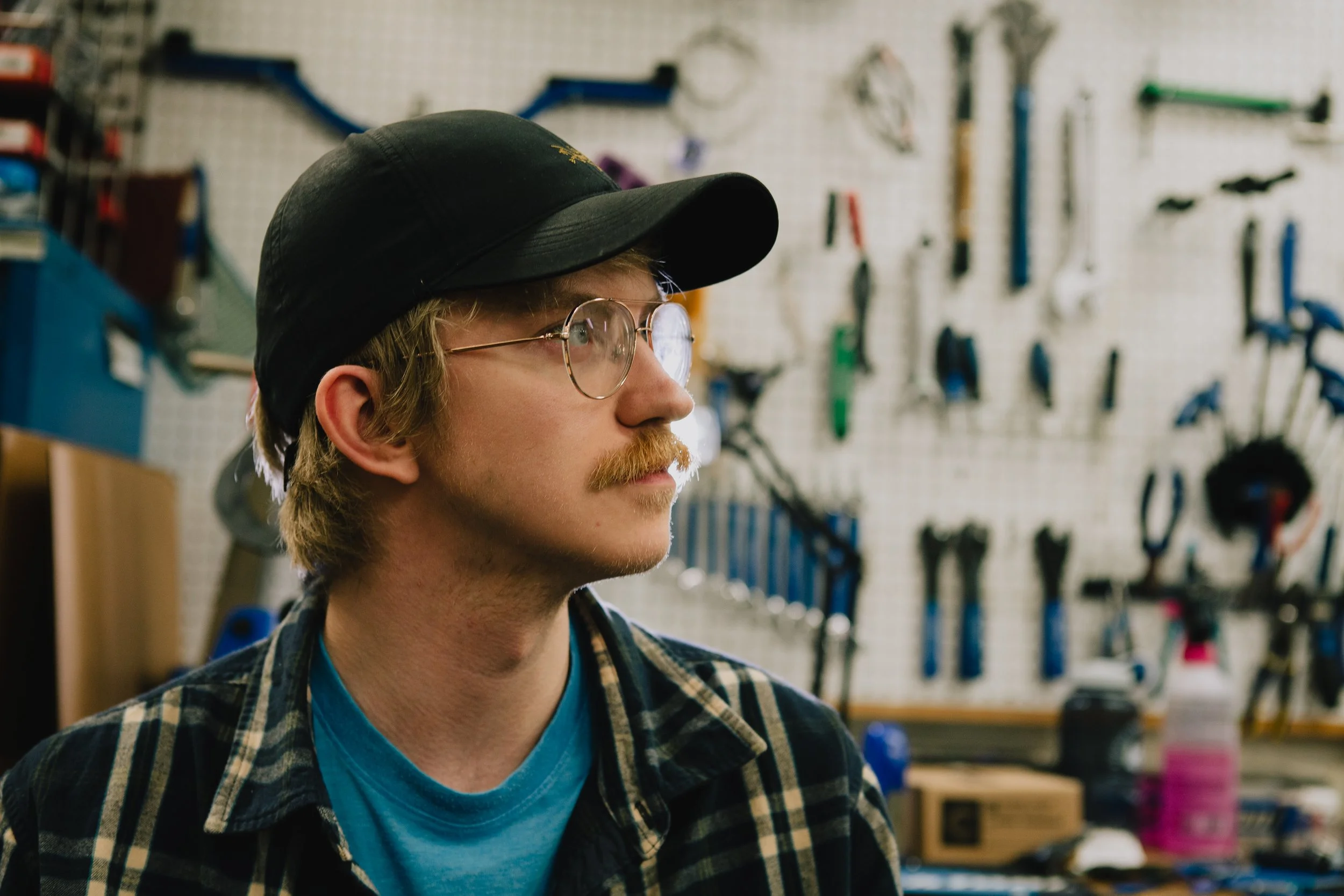
We begin our interview series with Stilly. You’ll have to ask him about where his nickname came from, and why his first name is James, not Elvis or Frederick.
He admits he didn’t initially love the outdoors. In fact, he was bullied into it.
What sparked your love for the outdoors?
Stilly: Alright, so I’ll admit that when I was young and I entered Cub Scouts and then Boy Scouts, I actually kind of hated the outdoors. My first camping trip was rainy, and I was soaking wet, and it was 26 degrees. My sleeping bag was 20 years old and terrible. It was soaking wet in the tent and freezing cold. At that point I was very disenchanted with the idea of the outdoors. I wanted to be a stay at home shut in kid that played video games all the time. But the more I went, the more I learned to love it.
It was a little bit of the fresh air, a little bit of the idea of being outdoors in the way we’re supposed to be. Not stuck in a house with air conditioning or heating. Just the idea itself of nature. I did Boy Scouts all the way from Cub to Eagle, and if not for that, I probably would have been a total shut in. I never would have gotten the job at REI either.
I did a lot of fishing as well. I consider that to be part of the outdoors and being part of nature. Sitting out on a boat with family. Trying to catch fish and never catching a single fish.
Sarah: Do you have anyone you consider an outdoor mentor or helped foster your love of the outdoors?
Stilly: I definitely had a few Scoutmasters in Scouts, and I had a few older kids who would guide me, but there wasn’t any one specific person. I had a lot of mentors and a lot of people who had helped me and showed me what to do. There were people who would tell me to get over it, you’re going to get dirty, you’re going to get gross, you’re going to get soaking wet, you’re going to get cold, but you’re going to love it.
Sarah: Do you have a better connection with people who you’ve spent time with outside? Do you think being outside helps that connection?
Stilly: Oh, 100%! The air is fresher. You get better conversations, and you don’t really know somebody until you’ve been sitting around a campfire with them until like 2 AM drinking and just chatting about the world or whatever’s on your mind. My best friend would not be my best friend if we did not go camping far more than we should have during school and work, and stuff like that were we just run away and escape to the woods.
Stilly and Jackson joke about graduating.
Stilly: Yeah, bring a 12 pack, sit by the campfire, drink Coors Banquets, listen to the coyotes in the background and just chat about everything. So, I absolutely think that it does help build stronger connections between people. It’s just a more natural space.
Sarah: That's so sweet. So, it's like the walls come down.
Stilly: The walls come down both physically and figuratively.
Sarah: Yes, pun intended. So, most trails and campsites are part of federal and state protected public lands. Um, so funding for these public lands allows the lands to be conserved, affordable, and accessible. When did you start associating your love without the outdoors to with public lands, or did you ever like make that connection?
Stilly: When I was growing up, we did a lot of camping on Civil War battlegrounds. My assistant Scoutmaster was a Civil War history buff. He would drag the entire Scout Trop to every single battlefield. If I had to guess, I’d been to almost every single one in Virginia, and they’re all public lands. They’re all owned either by the county or by the state or by the feds. We had also been to private campgrounds, but those weren’t that good. I’ve never loved a private campground. I don’t think I ever will because they feel a little bit corporate and a little bit like you’re being watched over. You’re just in society at regular and not out there free. The great thing about public lands is that they are for public use. They’re meant for people to go out there and do fun stuff and go hiking. At the very least, you’re free. The public lands don’t belong to the government. They belong to you and me, right?
Sarah: That's so interesting. I never even considered battlegrounds as like public land, but you’re right, they are.
Stilly: And not only are they public land, they have a ton of history to them that it's important to experience. I mean, the bloodiest war in American history, and you can walk around the battlefields and see where the stones are stained.
The American Battlefield Trust in partnership with the National Park Service has saved 60,000 acres of battlegrounds in 25 states. The trust aims to preserve, educate, and inspire the public, with emphasis on our First Amendment right of free speech and assembly. The American Battlefield Protection Program provides grants through the NPS that has protected 28,000 acres of battlegrounds and surrounding boundary lands.
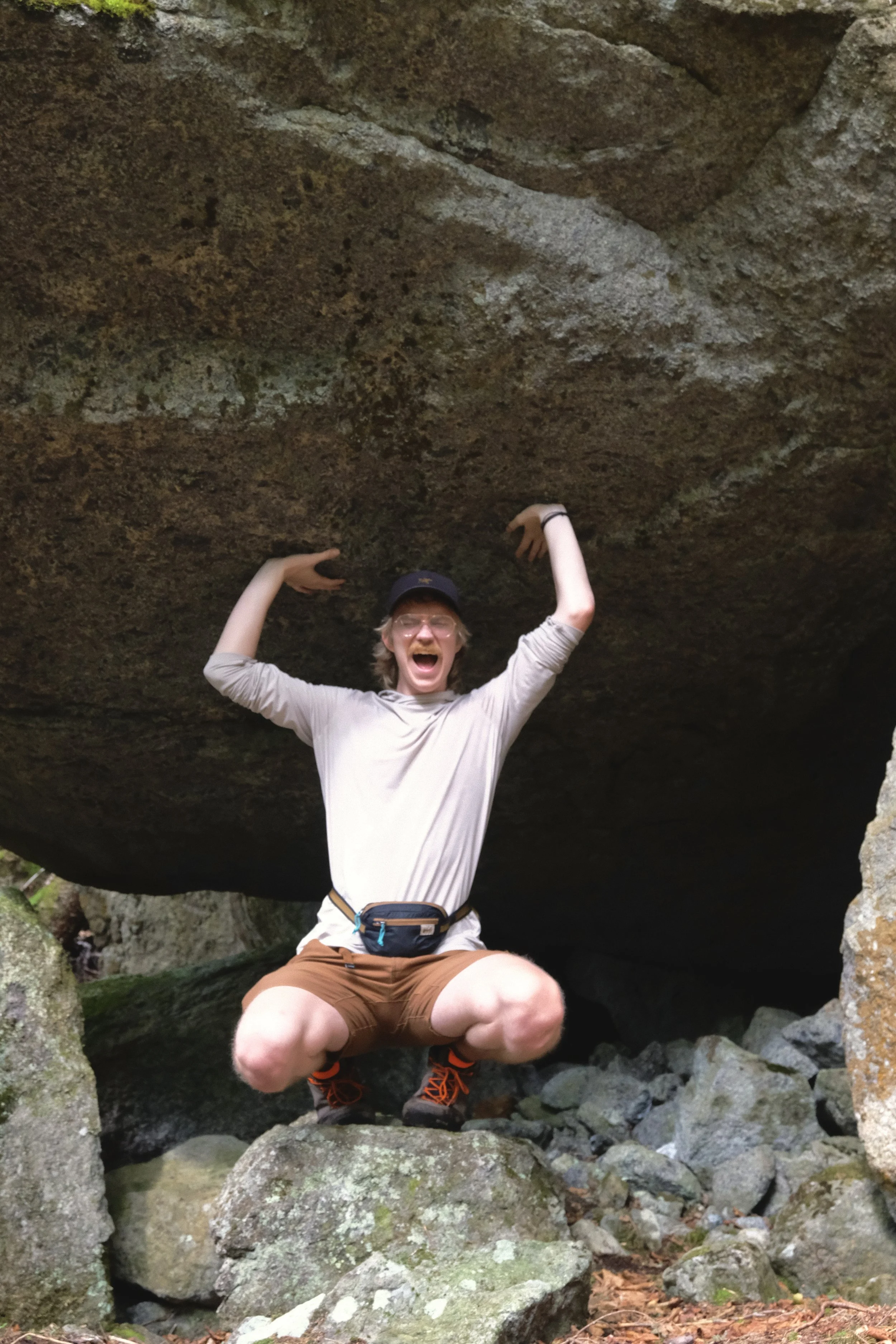
Image provided by Stilly
We go on to talk about a camping trip that made him feel capable, accomplished, and in awe of nature.
Sarah: Can you describe a trip on like a public land that sparked a moment of self-discovery. Where was it? What happened? What did you see? What did you feel like? how did it impact you?
Stilly: It was the first time I went to St Mary's Wilderness and I'll name drop it. It's fine if people go there. I'm not going to keep Saint Mary's anymore.
It was part of a Scout summer camp program for kids who had all the merit badges and were bored with the regular kid stuff. I had these two guides. One was a local leader and one of them worked with the camp. Both had been around the area between here and Raphine out towards the mountains. One was more of the guide. He knew everywhere. The other one was more of the muscle but knew a lot about camping, hiking, exploration, and the outdoors. They took us to St. Mary’s Wilderness. It was me and about seven or eight other people. We all started hiking. We got lost a couple times. The guides let us get lost. We crossed plenty of rivers. They let us trip, roll our ankles etc. until we get got to the actual waterfall section, which is the real pretty part. I'm looking at it, staring at it. A few people are going up and cliff jumping from dangerous heights. I did not do that because I'm a little bit more of a scaredy cat than they are when it comes to jumping off cliff faces. But it was gorgeous, watching all that.
And so, at that point, we turn around. And we think we're heading back. And the guide says, “alright, I want you to look to your left!” And there was like, a, you know, pretty big cliff wall. Straight up. He said, “Go up that. Uh, once you're up there, follow this compass degree, and you're going to keep walking and you'll find the trail and you'll find us eventually as long as you follow that compass degree.”
So, we are free climbing the side of this kind of hill, mountain, I guess, having no idea where we're going. And at one point, I dropped the lid to my water bottle. Somebody else runs down, grabs it for me, comes back up. There was somebody who was more out of shape than we were. We ended up physically pushing him up the mountain. And we all get to the top, and there's this gorgeous view overlooking the waterfall and overlooking the trail and just the whole area of Saint Mary's. And you know, we're catching our breath, but also, I'm just kind of sitting there and taking it in and realizing, like, this is. This is incredible. Like, this is a ton of fun. Like, I just did that. And we just hiked. Great time.
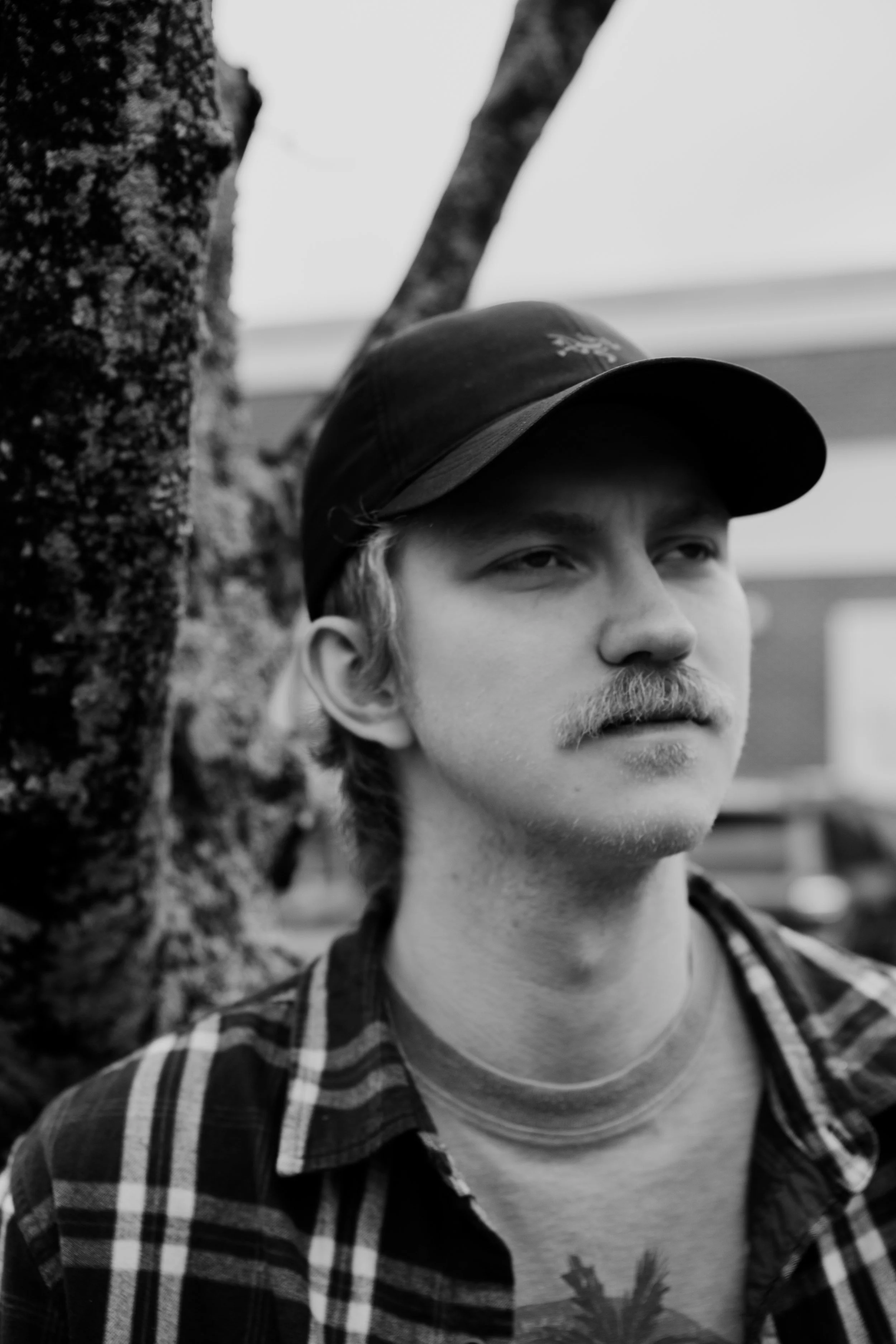
Sarah: Do you think being in that wild space helps with your mental fortitude and mental outlook?
Stilly: A hundred percent. I grew up going to the beach a lot as a kid, and I always joke that the beaches are for the physical wounds, but the mountains are definitely for mental health and mental wounds. I don’t know if it’s more oxygen out there. I don’t know if it’s more sunlight. You’re getting more Vitamin D. I don’t know if it’s the crickets at night that lull me to sleep. I sleep far better outside than I ever do inside of a house or a building. I go out there to clear my head and to exist in nature. Not in the hippy “be one with nature” and ground my feet on the bare rock, but I definitely have put my bare feet on the rocks and laid out in the sun and just kind of absorbed it all and let it all settle. It’s a lot more peaceful out there. It’s a lot more quiet. There’s no drone of the average electronic or the fridge in the background or cars in the distance. It’s just you and the sounds that were meant to be there.
Sarah: It sounds like the outdoors are a big part of your life. Do you think the public lands shape your sense of identity and belonging?
Stilly: I think so. If not for the fact that I joined Boy Scouts, and I'll admit it, I was bullied a little bit into loving the outdoors, and I'm glad that I was. Because if not for that, I would have been like a spineless, yellow-bellied coward, and probably like some shut-in that only plays video games 24/7 and has never touched grass in my life. But I do think that. Having the drive to explore and to exist outdoors and see the natural part of the world has helped a lot in shaping me to be who I am today.
Sarah: You mentioned Saint Mary's earlier. Are there any other specific parks or public land areas that feel like home to you?
Stilly: There is a small section of the George Washington National Forest, and I will gatekeep this location, and it's this very like hidden campsite off a fire road that I discovered with some friends when we were just looking for a place to camp, right? The National Forest are open camping. You can camp wherever you want. We were just kind of cruising up the road until we found what looked to be the perfect campsite. And I mean, it was, it was perfectly flat. It was well hidden. Good drainage. It didn't flood. I must have been to that campsite over a dozen times in the span of a year. I remember one month where we went at least four times in one month. It was an hour and a half away and it was super easy to get to. We knew the area like the back of our hand. We'd made friends with all the locals in the nearby town.
And the funny thing about it, what made it feel like home, is the campsite was pristine. It was very clean, however, always by the fire pit, there would either be spare firewood or drinks. And it was one other group that would go to that campsite, and they would leave firewood or drinks. We would use the firewood or drink the drinks and then leave all our excess firewood and drinks. And so, for a good few month period, we kind of had this trade going on which we leave stuff for you. You leave stuff for us. It was this kind of mutual understanding. We've never met. We never will meet. We always go on different days. But we're both sharing that space outdoors and being respectful about it. We're not leaving our trash or bottles anywhere or anything like that.
It's a camaraderie of people I've never met, and I have no idea who they are, and I never will, but they loved that campsite as much as I do.
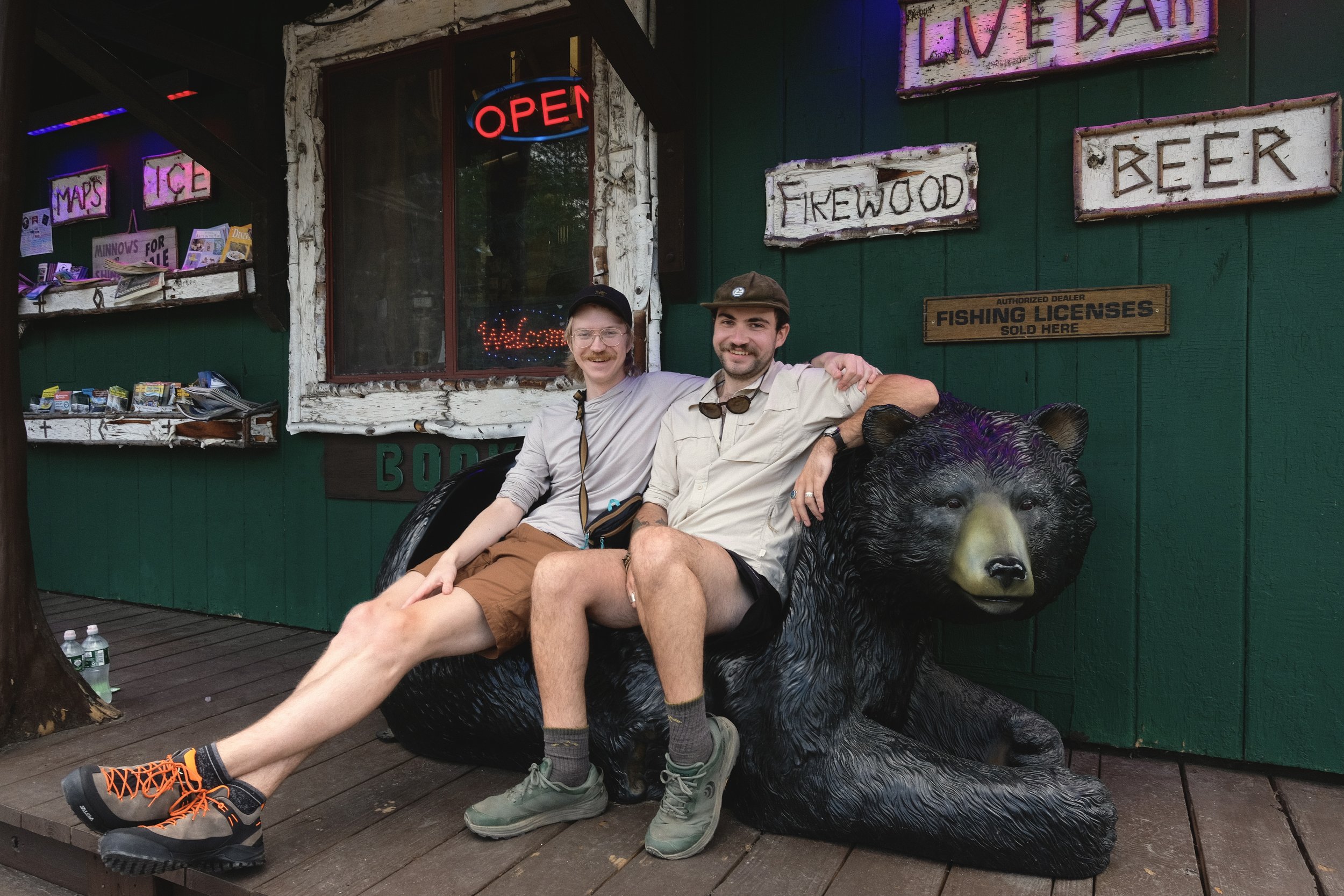
Image provided by Jackson and Stilly
Sarah: There's a lot of legislation going to sell off our public lands or develop our public lands. Is there a place in particular that you're afraid that we might lose or any aspect of the outdoors that you're afraid that we might lose?
Stilly: I view our public lands, and I consider state parks, mostly national parks, national forests, Bureau of Land Management land, as a sort of national inheritance. For better or worse, this land has been kept the same and passed down from generation to generation to use. It has expanded, and at times shrank, but it is ours. At the end of the day, like I said earlier, it's not the government's land. It is ours. It belongs to you. It belongs to me. It belongs to everybody else in this country. And it should stay that way. Otherwise, when acres are sold, more acres are going to get sold. And then more acres are going to get sold. They're doing logging aspects in George Washington National Forest at a larger degree. They're parceling out land to be used for lumber, and then just leaving it and not really replanting trees or doing any maintenance to the area. Just coming in with their big machines, cutting down trees and leaving. I think that's what I'm most worried about. Is that even if they don't take the land completely and put a shopping center on there, they're still going to cut down the trees, and they're leaving quite a trace.
Sarah: Yeah, and I’m just thinking of all the erosion from clear cutting.
Stilly: Exactly, yeah, and there's always events that that leaves less trees. I mean, that area of George Washington National Forest had a huge wildfire a few years ago. I remember going right after the wildfire and just being in complete awe of this lush green forest that I once knew being reduced to not even a blade of grass anymore. Just that hot. Across the road that we drove, the trees were scorched from how hot the wildfire was.
Sarah: My family is from the George Washington National Forest area. When I was looking at colleges, there was a huge fire. I was supposed to visit one and we had to take a detour because the fire was blocking our way. We'll drive by that area now, and I've been out of college for a while now, but it's still like showing the scars from that one forest fire.
Stilly: I do realize that forest fires are a national park or a natural part of the nitrogen cycle, and they exist as a correction to nature. It has been really heartening to see. Like, every time I go back, there's more and more green. There's more shrubs popping up. You see saplings in the distance. There's animals that are running around there. And, you know, nature will repair itself, but we have to let it repair itself. Yeah, cutting down a ton of trees in the local vicinity is not going to help that.
Sarah: Yeah, and that's different from the fires too, because at least that ash is mostly going to stay there, whereas if it's logged…
Stilly: Yeah, the ash is going to replenish the entire forest. The logs are getting taken away.
The Peachland WPA breaks down the dangers of clearcutting and differentiates its impact from wildfires. Wildfires, while also scarring the land, leave behind nutrients for new plant growth and does not disturb the soil ecosystem like heavy machinery does. Wildfires burn with variable severity, resulting in smaller patches of cleared area that still have parts of trees that can serve as shelter for animals, birds, insects, and microorganisms. Clearcutting removes everything and exposes the soil to the elements, causing massive erosion, flooding, and landslides that choke our rivers and streams. Clearcutting is more likely to result in destructive landslides than heavy rains. The increased runoff reduces the land’s ability to retain water and replenish our aquifers, further discussed by the Sierra Club. Many environmental groups suggest responsible select-cutting, especially in areas experiencing lower than average wildfires.
Sarah: We've touched on the community aspect of the potential loss of land, as well as the environmental aspect. How would you feel personally, would you feel like it's a loss to your personal self, or is it more like you're thinking about, community and the ecological.
Stilly: It's a little bit of both. It is a loss to my personal self, and I'll be a little selfish on behalf of everybody here that it's the land that we deserve and the land that we were promised. And it's a great gift that the people before us gave us. We need to take care and steward that gift. And if we're not careful, and if we're not loud, we will lose it. Yeah, and I don't want to lose it as a personal sense. Obviously, I do care deeply about the ecological efforts and the conservation of it all, but also I care because it's the land that I get to use. There's plenty of countries in the world that don't have public land or no public land rights, and we're blessed with a country of such diverse landscapes and biomes that we all get to experience because it's ours.
Sarah: You hear people say, “speak for the trees.” You're taking care of something that can't speak for itself.
Stilly: Correct.
Sarah: So, do you think that fact that it can't take care of itself, does that make it have a stronger emotional impact for you?
Stilly: Oh, it definitely does. It's the same way that you want to protect a puppy or a child, I'd suppose. Not to infantilize the entire idea of the outdoors, but it can't speak for itself. It's us, it's, you know, it lives on through us. And as we talked about the outdoors has played a pretty large part in my own personality in my own aspect. And through an extension, we are all nature.
The phrase “I speak for the trees” originated from Dr. Suess’ children’s book The Lorax written in 1971. The Lorax remains popular to this day, having sold over 1 million copies!
Sarah: You've mentioned history. Is there any historical story of land loss, or degradation that sticks out to you?
Stilly: This one's actually pretty recent. The senator from Utah, Mike Lee. He fought really hard to sell off a lot of land. I mean, he was spearheading the project. And I have never seen somebody get so much flack online from both the left and the right. That's just a terrible decision that's not even partisan at that point. That's just something you shouldn't do. It doesn't matter if people don't use it as frequently as other places. It does not matter if a [big box store] would look better in that area subjectively. It was a terrible decision on his part, and I think that his political career is still recovering a little bit from that proposal.
Republican Senator Mike Lee proposed to sell off up to 3 million acres of public lands in 2025 Big Beautiful Bill. The proposal was opposed by people on both sides of the political spectrum, bringing together gun-toting hunters, ranchers, avid outdoor enthusiasts, environmentalists, climate change activists, and anyone who loves a good walk in the woods. He claimed it would help increase affordable housing, despite the high cost of building necessary infrastructure like water pipelines, roads, and expanding the electrical grid. Propublica further investigates this proposal, as well as a similar initiative that struggled to be effective in Nevada. While the proposal was removed from the bill, attacks on our public lands continue. Many people, volunteers, outdoor associations, and businesses like REI and Field and Stream continue to push back on these proposals.
Sarah: It's awesome to see people come together, especially from both sides.
Stilly: And I think it is a bipartisan effort in which it is person versus corporation. To keep the outdoors “outdoors” and keep nature natural. I don't think it's a partisan thing at all, and I don't think that anybody from either party is frothing at the mouth to create more [big box stores] and parking lots. We have plenty of land that we can use, and we don't. We don't need to take the land away that we shouldn't use.
Sarah: Yeah, that's very true. Is there anything else that gives you hope? I know there's a lot going on, so I think trying to find hope in this situation is really important.
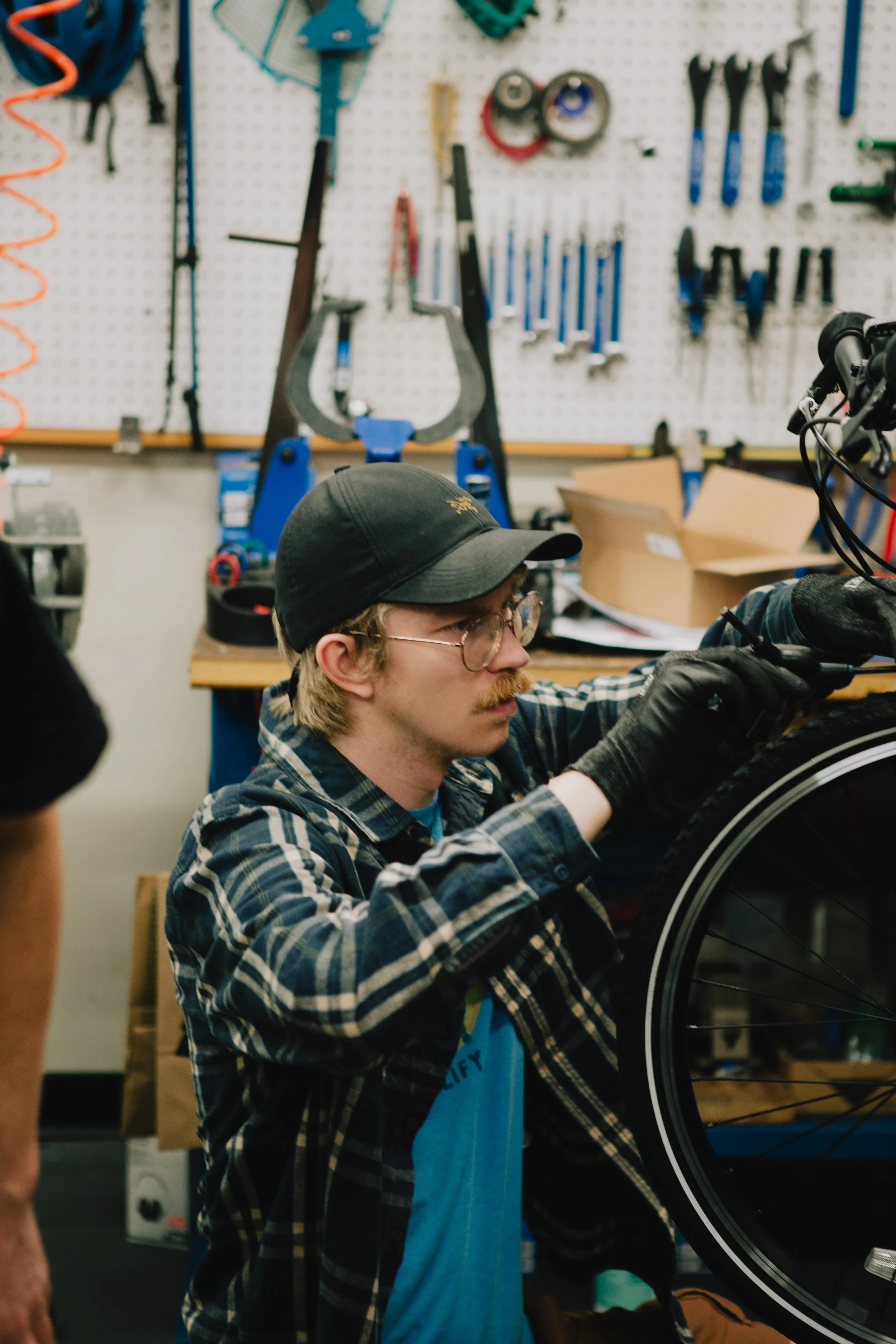
Stilly: It is. I have a peculiar position of being able to, not only steward the outdoors, but also steward the people that go to the outdoors. And it's a little controversial, and I should gatekeep the outdoors more. But on the other hand, the more the people use the outdoors, the more protected they're going to be. More people are going to be able to speak up and speak out for the trees for the forest for the land. And so the other side of the coin is not only do I have to now get people outdoors, I have to get them outdoors responsibly.
I have to make sure they know: pack it in, pack it out; take your trash with you; leave it better than how you found it. Leave nothing but Footprints and take nothing but photographs. And so I think if you're doing one, you have to do the other. If you're gonna tell people hey, go outside, go camping, you have to tell them to do it responsibly. That is a solution in which we have more people going outdoors now than we've probably ever had in American history. And because of that, there's going to be more people speaking up, and there's going to be more people who are more inclined to conserve our public lands.
Sarah: So, when you try to get people outdoors, is there anything that you would suggest, like one thing that you would suggest that they could do to help protect our public lands?
Stilly: Pick up the trash. It's, it's that simple. You're gonna go to campsites, no matter where you are. And there's going to be a broken bottle, or there's going to be a can thrown away or a ripped part of a tent and all you have to do is take it with you when you leave. Find a dumpster, put it in there, and you've left the place better than you found it. And I can't ask for much more than that. For people, it's just a very simple act and a simple gesture of “I am enjoying the space. I will give back to that space. By taking what shouldn't be there.”
Sarah: That's awesome. I like that. Well, that's like all the questions I have. Is there any like closing thoughts?
Stilly: No, I, I think that's really all I have. I've always loved the outdoors, and I think I always will, and it's a pretty big part of my life that I’m very proud of. I grew up in the outdoors. I grew up camping from the ages of 10 to 18. I would probably go two to three nights a month. Longer in the summer and more in the summer. And I have hundreds of nights of camping all across the East Coast. And I couldn't love it more, and I want to preserve that for my children and my children's children and every generation that comes after me. I want them to have the same exact experience of the magic of the outdoors.
Sarah: I love it! Well, thank you. First, interview done!